Showing posts with label Biswajit Basu. Show all posts

Tuesday, 20 June 2023

😰 Unexpected consequences of good deeds

From Biswajit Basu:

Here is a story I missed telling earlier but I just remembered a few days back and told Tuki & Deepak:
-----------------

*MY LIFE'S MOST EMBARRASSING INCIDENT*

This is a story of perhaps 40 years ago.  I was down from my ship for my exams (can't remember which) and studying at home in Delhi. We had a maid, Paapati, a very hardworking  Tamilian lass who stayed in our servants quarters with her hubby who was a cook in the Ministry of Labour. This lady was pregnant.

Her hubby had taken a complete month's leave in anticipation of her delivery.  But she did not oblige and he had to go back to work.

One morning while I was studying, my mother burst into the room and said that Paapati was getting severe labour pains and her hubby could not be contacted.  So I was to take her immediately to hospital.  So I packed her into an  auto and went to the Emergency Ward at Safdarjang Hospital, which was the nearest.

They were quick and took her away immediately saying that delivery was imminent and asked me to pay her fees.

I went to the cash counter and paid answering questions like my name, age, family details etc. While departing from the counter, 2 fat ladies sidled up to me and asked me how many children I had.  I honestly answered I had one (Piya).  Then one of those fat ladies with a particularly sickly, sweet smile said that since I was getting my second child, "katwa lijiye" (jargon of those times)! implying vasectomy!  Soon a crowd gathered and these two ladies kept exhorting me to be patriotic with promises of transistors, a bicycle etc.

I escaped somehow and rushed back to the cashier and told him that while I had certainly paid for the delivery, the girl was our maid.  The cashier ruffled through his papers and said my papers  had already 'gone' and he would try to correct it and I should come the next day.

I then returned to Emergency to show them the payment challan and met a whole lot of smiling doctors who joyfully  announced I was now the father of a bonny girl!
 
Those were Sanjay Gandhi's days and I was terrified that those two fat ladies would send goons after me to have me vasectomised by force in the same hospital.  So I decided to escape from this predicament and run home and tell Ma and Moon.

 Moon was fortunately an intern in Safdarjang at that time and so I requested her to have the record corrected in the hospital.  But she could never conclusively confirm it had been done.

I also castigated my Mom for sending me off on a sensitive job like that.  But to be honest, what else could she do?

So around 40 years have passed since then and that girl, whose delivery fees I paid, has probably  gone through half her life with my name listed as her father in her Birth Certificate issued by Safdarjang Hospital!


♾️ Doubly related

One of the grand matriarch of our extended family is Arati Ghosh (Mawana-Noida-Bangalore). Her elder son, Partho Ghosh’s wedding is one of the few big family gatherings from my childhood. It was the first time I met many of my distant cousins, most of whom I still haven’t met again. But Arati Maashi stood out from the crowd, and till this day, continues to stay in constant touch. 

I remember even my formidable mom was in awe of her discipline. She always narrated the story of how they were with Maashi for a meal, and she threw out an entire serving dish, just because it slightly touched another dish on the table (thereby becoming ‘aytho/ jhootha/ impure). The incident left such a strong impression on my mother that every time her name came up in a conversation, that story was sure to be told and retold! To her, Arati Maashi was a family role model of ‘bhodrota’ and tradition! She had no trouble accepting that she was scared of her! By the time I grew up to interact with her independently, she was much mellowed down and I remember being in Bangalore during my first job as a trainee in Unilever, and visiting their newly built beautiful house. With Sonjoy-da and Nisha-di being talented architects, who have gone on to become much respected in their careers, the house was truly an airy wonder of light and space. And within it, Atari Maashi’s gracious hospitality is second to none. Last month, my husband Rupesh was able to drop in for a visit during a business trip. What started as plans for a quick visit over breakfast became a full fledged multi-course delicious dinner! And Rupesh got the full ‘jamai’ treatment! 


(L-R: Sonjoy Ghosh, Nisha Matthew Ghosh, Rupesh Tripathi, Arati Ghosh)

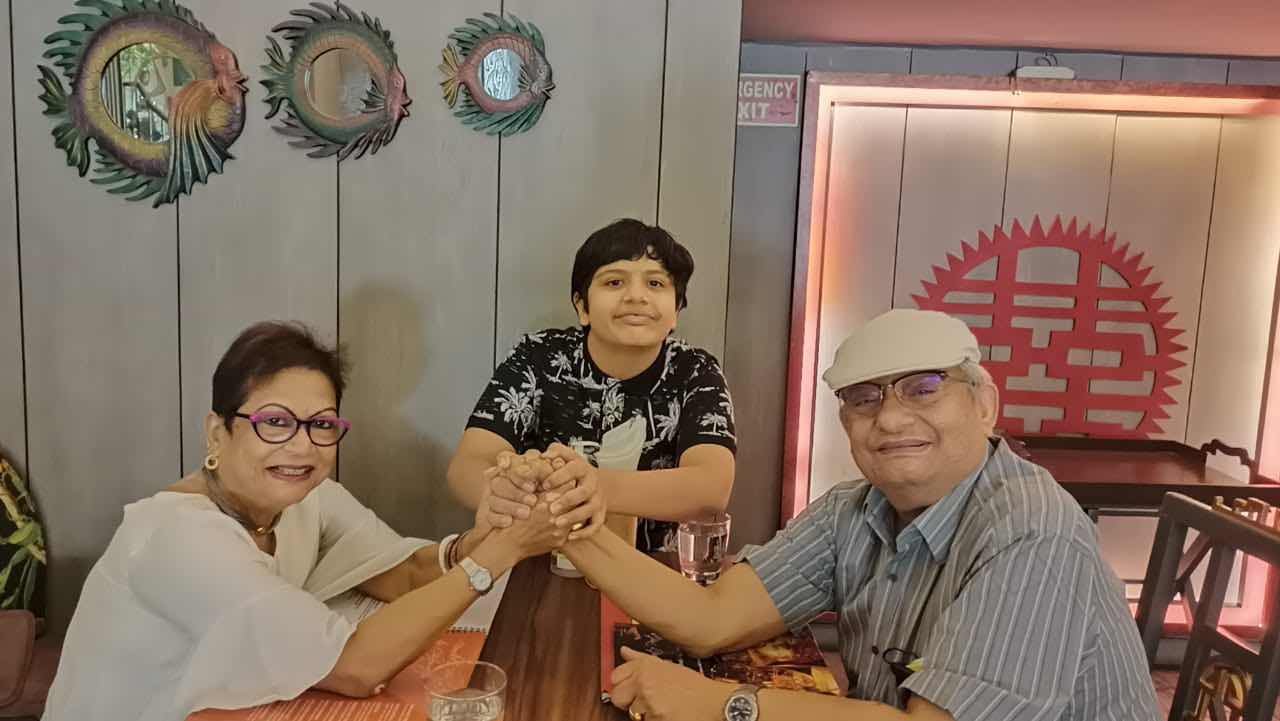
During this visit, an interesting point came up - I have always called Sonjuda as my brother but he thought I was his niece. It was my sister Surabhi (Tuki) who reminded us of the double relation. I am both cousin and niece to him since Arati Maashi is related to us by both birth AND by her marriage!! 

And who else can clear up this circular family connection than my Uncle Biswajit Basu, the historian and storyteller of the family! 

Here it is, in his own words: 
(From Biswajit Basu)

I'll explain it to you so it is clear once and for all. Tuki is right.  The cause of the confusion is the double relationship.  Here goes the explanation:

Aratidi's son is Sanju and Aratidi is my jethamoshai's (my father's next elder brother's) daughter.  That makes Aratidi Moon's and my first cousin.  Therefore Sanju is Moon and my nephew.  Therefore, by this relationship Sanju is your cousin.

Now, Jorbagh's Maima's brother, Shyamal Jamaibabu, married Aratidi and Sanju is their son.  That makes Aratidi my Maima too and Sanju then becomes my cousin and also your mama.

Now, since my relationship with Aratidi as my first cousin is much closer and more direct than through Shyamal Jamaibabu which is more convoluted, therefore I regard Aratadi as my cousin sister making Sanju my nephew.  That goes for Moon too.  So by this  closer relationship, Sanju is your cousin (but a mama by the more distant relationship)

Who said family branches are always straight! 

Tuesday, 4 April 2023

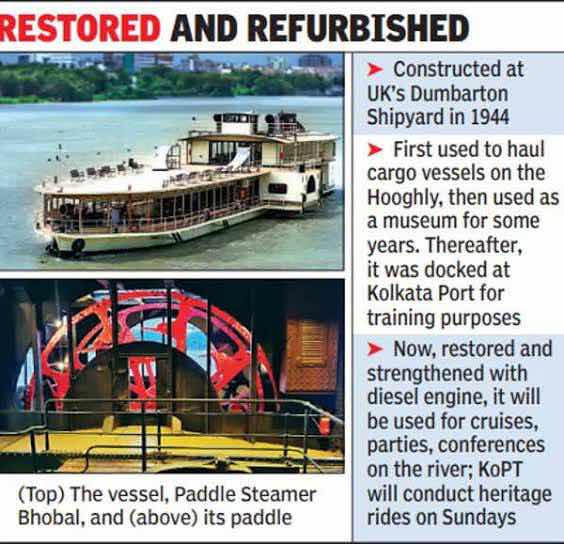
⛴️ Paddle Steamer Memories

From Biswajit Basu:

These memories are from my early days in Marine College:

While I was appointed to Garden Reach Workshops (GRW, which later became GRSE), for my apprenticeship, my dear friend (from school), Ramakrishna Nair was allocated RSN (the River Steam Navigation) Company which had its works a little downstream from GRW on the Hooghly.

Sometimes, I would bunk from GRW and spend the workday with Nair in RSN (which later became CIWTC).  Those were delightful days which we spent on the old and dilapidated paddle steamers that were tied on the river.  We would admire the gleaming 'open' steam engines with their huge crankshafts and imagine them chugging along on the river.  The gleaming copper fittings on the boilers, guage glasses and asbestos lagged steam pipelines were fascinating and I remember  them with great nostalgia today.  We would drink tea from earthen cups and, leaning over the side of the paddle steamers, watch the floating objects on the river pass by. Those were delightfully languid times and the years were 1966-69, more than half a century ago!


(India’s only surviving paddle steamer as of 2022. Photo credit: Times of India, 2022)


(Author note: More about Marine College is in 
this post.)

Sunday, 8 May 2022

💩When you gotta go, you gotta go…

Warning: Some may find this post triggering. In many possible ways. You are warned. 

One of the topics that always dominated conversation in our family get together, was bathroom related discussion. Whether it was potty puns or toilet tales, the topic always snuck into normal conversation! My usually appropriate-behavior mother thought nothing of slinging her Pathology jokes like - other peoples susu and potty is our bread and butter - no matter that the conversation was around the dining table … and people might be eating! And despite some of us cringing, others would leap onto the conversation track and then, god help us all. When everyone met, both the inputs and outputs of the digestive system were always addressed - in conversation and in practice! 

So how can this blog be a slice of those times, without sharing of such alimentary tales. Here is a snippet from the man himself, master storyteller, Biswajit Basu.

[08/05, 9:33 am]
 Biswajit Basu Jio: A SHITTY STORY

Last night as I tried vainly to sleep, I suddenly got the urge  to take a dump.   On the potty, my mind drifted to reminiscing on the memorable shits I've had  in my life.

The earliest memories of shitting that I can recall was when I was a young boy and I got off the school bus in Delhi Cantt and my servant, Swarndas, would come to pick me up.  My mother would invariably send him with some water in a military flask which had seen better days. I would hurriedly jump off the bus and make a beeline for a grassy knoll, squat and let fly my load.  This would be right in full view of the other children on the bus.

Many years later when on a trip to Manali we got caught behind some battletanks on the narrow hilly mountain road.  After hours of trundling along behind them, the commander found a small stretch of  wider road and honourably (as always with our military) stopped to let us pass which we did and sped forward after long last.  Suddenly Piya announced she wanted to do 'a big job'.  I felt a strong  urge too.  Mr Thakur, who was in the car behind us shouted at us as we both scampered up the hillside "Hurry up otherwise those tanks will overtake us and we'll be behind them again".  Piya took her position behind a large rock but I had no cover and I squatted in the open on some tall grass and let fly.  Suddenly I half stood giggling uncontrollably.  What happened, Piya asked.  The wind had gusted a bit, tnembling the grass which was tickling my bum making me giggle.  And there was Mr Thakur screaming at me to cease and come down as the tanks had arrived.  Anyway thanks to the grace of the Indian Army, they stopped behind us to let me shit (much to my embarrassment).  This must have been the first time in the glorious history of the Indian Army that they were halted in their tracks by a shitting civilian!

In another incident on the hills again near Manali, when my boss the late Mr YP Verma and I had just started our way back to Delhi I felt shitty and decided to stop   Verma saab was happy too as his pressure was also building up and so we chose a lovely spot in a lovely valley, far from civilisation,  beside the softly gurgling River Beas to squat for our respective shits.  We squatted there lost in the pleasure of relieving ourselves and the beauty of our surroundings discussing the complications of dredging in the Himalayas.  When suddenly, Mr Verma, shitting on my left gently whispered to me "Don't look on your right".  So all this while as I was studiously looking right to avoid looking at him shitting, I was now forced to look at him.  Then after a while, he announced that it was ok now to wash and go back to the car.  So we washed our arses in the pristine waters of the Beas and in the car I asked him why he had stopped me from looking right and he said "There was a huge snake passing by".  He did not want me to startle the snake and run around with a shitty arse!  I was thankful for my narrow escape!

 Once on our way to Rohtang Pass, I felt shitty.  All our bottled water was finished and so we stopped at a tea Hut so I could buy a Bisleri bottle to wash my arse.  With great difficulty, he produced one that was so dirty that even he was reluctant to sell it.  I was almost shitting in my pants whilst he laboriously set about cleaning the plastic outsides.  I grabbed the bottle from him, ran to the mountainside and let fly.  That poor shopkeeper must have now convinced himself, that just as he had thought, people from the plains were extremely rude and dirty!

Now let us move abroad.  We were touring the UK and in Edinburgh we decided to visit the Queen's yacht "Brittania" which had been laid up and converted to a museum.  While we went around,  suddenly I felt shitty.  The attendant told me that to visit the toilet, I would have to go back to the wharf.  I knew immediately that I would not be able to hold on but I had to try.  In the labrynthine cabin rows, I found a door and opening it, I found myself in a toilet.  With great relief, again I sat down and let fly. While at it, I laughed as I conjectured how the Queen might have entered the same toilet, flipped up her skirt and had a peaceful shit.  There was no toilet paper and so I washed with the water from the washbasin splashed onto my arse.  That must have been the first time in the long history of the Brittania that someone washed his arse instead of wiping it with toilet paper!   On the wharf, I met my uncle who was wondering where I had disappeared.  When I told him the story, he laughed and told me it was "Basu's Revenge" for 200 years of their occupation of our lovely country!

Now let me tell you of my shitting adventure in Dubai.  I was staying with my cousins and my cousin sister said she wanted to show me her new apartment she was hoping to buy in a huge housing complex.  Once there, as is my habit,  I had to mark my territory there.  In short I was shitty.  The Pakistani workers' there had no idea where I could find a toilet.  As the pressure built up, I entered into a toilet under construction and again let fly.  There was no toilet paper and no water either.  This is probably the only time in my life I had left a toilet with my bum unwashed.  My cousin sis laughed uproariously when she heard my story on the way back and said I had better disinfect her car seat which I did.

Once in a very famous Italian restaurant in Rotterdam, I felt shitty.  I was guided to the basement where there was a long curving corridor without a soul around. Walking along, I noted a door marked Signori and another marked Signora.  I naturally thought the i ki matra meant female and the a ki matra was for males.  So I entered the door marked Senora and I was surprised that there weren't any men's urinals.  I thought maybe because it was such an upmarket restaurant they did not like open urinals for men.  I entered a cubicle and had a lovely shit.  On coming out of the cubicle, I saw a lady entering the main door and she looked at me with disgust and said "Pervert" as I rushed past her realising there was something wrong.  Once outside I noticed a man come out if the door marked Signori.  This was the only instance when I had the honour of shitting in a ladies toilet.

Very recently, Swati and I had gone to get our Wills registered.  At the Registrar's Office I felt terribly shitty.  There was a men"s toilet and in the row, there was only one door open and so I entered and peacefully relieved myself.  In the end, I found there was no water coming out of the bum shower.  Being an Engineer, I tried the nipple in the inlet pipe an opening it slightly, I found that a trickle of water was coming out of it.  So I ventured to open the connector completely.  Water gushed out at a tremendous velocity.  Swamping everything, my tousers, underwear, shirt etc.  I could hear Swati asking if I was ok.  I emerged, totally drenched.  And Swati who had entered the men's room (with a lot of me around) said you wanted to go for a shit but you've had a bath as well!

Well, this is a brief recount of a lifetime of dumping adventures!

Tuesday, 6 July 2021

📝Letter from a grandfather to a grandson


Following this documentary, I (Biswajit Basu) have written to Prithvi (grandson) as follows:


Prithvi.....I want you to see this entire video properly and ponder over it.  It is about Satyen Bose, CV Raman and Meghnad Saha. Bose and Saha were Bengalis and Raman did his research leading to the Nobel Prize in Calcutta.  Think of the legacy they leave behind and that you are so close to those of Saha and of  Bose with whom you share a surname (Basu and Bose are the anglicised form of Bosu).

One of the anchors, Mr Partha Ghosh (with the white goatee) is Sudeshna auntie's own uncle (her father's brother) and also a great physics scientist of today.

You are of their lineage and thus a part of their great legacy. Your birth has brought you so close to these great men and even more greats like Subhas Chandra Bose (his ancestral house is still in Changripota which is now called Subhasgram which is our ancestral village) and to Swami Vivekananda (Narendra Dutta) who was related to my step grandmother).

Do something good in life.  You are so close to these great people and must live up to their legacy.  Remember that in whatever you do.  Study hard, be honest and moral and you will automatically live a good life.


(Swati Basu, Prithvi, Biswajit Basu; Delhi June 20, 2021)

👵🏼👵🏼👵🏼Three Grand Ladies


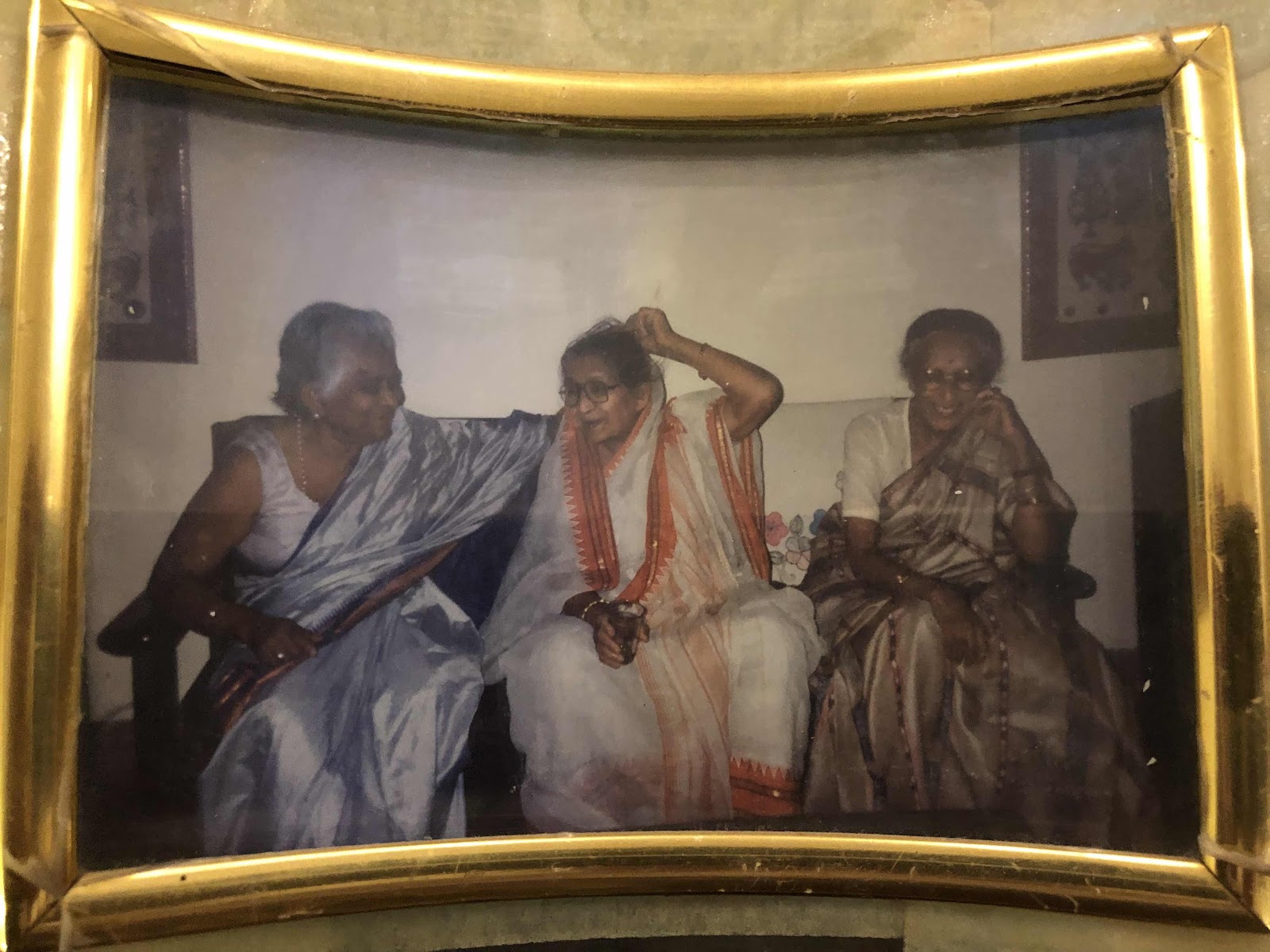
(Picture from Monisha Choudhury’s collection. Place: Netaji Nagar. Sometime in the 1980-90s)

In conversation with Biswajit Basu, to tell us more about these three lovely grandmothers:

On the left is my mother, Anima Basu, your grandmother.  She was born in Shimla in the times that the summer capital  of British India transferred to Shimla every summer.  Her parents were Basanta Kumar Dey and Parimal Dey (née Mitra, Madeleine's family). She married my father after he returned from World War II, in 1948. I was born in 1949 and Monisha in 1953. She passed away in 2004.  You must have heard a lot about her from your mother. 

(Author Note: Indeed, I have many recollections of my Dida! She was a prominent figure of my childhood. She was also present at my wedding in Dec 2002! Some more about her, as told by my mother, is in this post - Memories from another era)

In the centre is my Jethima, Shefali Bose.  She was the wife of my Jatamoshai (my father's elder brother), Rabindra Kumar Bose (note that Basu and Bose are the anglicised version of Bosu).  I remember my Jatamoshai as extremely fair with red hair!  He retired as the GM of the Chittaranjan Locomotive Works in Asansol.  He died in Gwalior while working for CIMMCO.  Their father was Girendra Kumar Bose who lived in Changripota (now called Subhasgram) to honour Subhas Chandra Bose whose house, in ruins, is still standing (when I saw it last, there was a tree that had burst through its roof).  Apparently he is related to us and was my father's uncle.  Shefali Jethima had 3 children, Arati didi (who lives in Bangalore), Deepakda (deceased) and Khukula (in Gwalior).  My step-grandmother was a Dutta said to be of the family of Swami Vivekananda.

The third lady on the extreme right is also my Jethima (Chhabi Rani neè Mitra) whom I fondly called Jodhpur Jethi as she lived in Jodhpur Park.  She was the wife of Srutiraj Ghosh, my father's cousin and Toto's grandfather.  She died on 9th September 2008 (date corrected). She was also a Mitra before marriage.

That brings me to the end of my nostalgic journey!

Author Note:

Another Grand Lady from our past was Nina, Jodhpur Jethi’s mother-in-law. Here is a wonderful article about her by her granddaughter, Prajna Sen - Memories of the Matriarch

Friday, 25 June 2021

🌌Life - A poem by Biswajit Basu


LIFE

I
I look up at the starry firmament

Heavenly stars dot the velvet curl of the sky,

Trillions of planets, billions  of miles away

Seemingly living forever: never to die.

II
Cast your eyes through the verdant forest

Vertical trunks support the spreading branches in everlasting rest,

In a silence broken only by the songbird

Cedar tops sway as the wind whispers through its crest.

III
Look at that lovely landscape

Undulating fields of golden corn that lean towards the gurgling stream,

Laughing at their private joke in nature's open book.

As they go along their lives as if its an unending dream.

IV
Look at the hills yonder of varying height,

Colourful toy houses cling to their basking sides,

Illuminated by the soft light  from a clouded sky

Wherefrom the sun filters through its misty light.

V
Look at the lonely cheetah poised high on a tree

And the herd of elephants in the turgid stream

Trumpeting their happiness, gambolling.

Celebrating their existence in this life, a dream.

VI
But the beauty of our world is not for all to see

My just born puppy lies forlorn and quiet on my lap,

Eyes unopened, hoping to live in a new world

Breathing softly as if in a dreamy nap.

VII
I put him in an old woollen sock and close to my chest

To keep him warm and keep him alive

I stayed awake whole night long,

And wiiled the powers that be to make him well and thrive.

VIII
But it was all in vain for he died early that morn

And I remember I cried so, for a life snuffed out for no reason at all

I realised that day that everybody lives according to his destiny,

Its duration is till you get the call.

IX
It has been written when you will be born and when your time will be up

And nothing can deter the course of your destiny

For life and death are preordained

And lives in mysterious secret within Mother Earth.

X
What remains then is the intervening time

Which we call life and is fraught with uncertainty

And what you make of it has a bit of your choice,

But is still mostly a continuous series of devious  probability.

XI
So I look back now at my own passage through the vicissitudes of life.

Happy it has been interspersed infrequently with events, sad

And I realise that my days of undulating corn fields, whispering cedars and bubbling brooks are gone 

And they will not come back again to be had.

XII
When destiny rings the bell to end my watch, like on my ship

And this world takes me back to its folds,

Some will grieve my departure but I will be beyond any worldly care

As I walk through the whispering cedars on other worlds.


-Biswajit Basu 
-----------


Monday, 7 June 2021

🇬🇧My Early Memories of the UK (1955-56)


We reached London in August 1955. It was probably the worst time in the year to go to the UK.

We disembarked from SS Batory in Southampton and went by train to London. We had a flat on the First Floor on 5, St Charles Square, Ladbroke Grove, London W 10 with a kitchen and a bathroom on the left as you look upwards and our bedroom/drawing room on the right facing the front. I went back to this address around 2005 and it was still there.  Better painted but still otherwise the same. In front of our window, where earlier there was nothing, now was a school.  Beside our house on the lane on the right was a bus terminus which is not there any more.


My earliest memory is of post-war London. Cold, grey, drizzling and an acrid smell in the air. I first joined Oxford Junior School but it was quite far from home and I changed over to Bevington Primary School which was closer and at the junction of Portobello Road, famous till today for its Saturday market when second hand goods and antiques were sold for a pittance.

My classrooms were bright and airy we were always in one fight or more at the same time (especially with the girls). At our 11o'clock break we would get a sealed bottle of whole milk which was compulsory but an ordeal to drink because it was so cold. Then we would go out into the playground to play or fight (usually wrestling). We would play a game called "conkers" where we would attach a thorny fruit (a conker) to a string and swing it about the adversary's conker and deftly pull the string till one conker broke away.  The conker that had parted with its string was the loser.

It was back to classes till lunch which was in a huge hall. There we would have to collect our plate which would have some bread, potatoes, vegetables (usually spinach) and some gruel with a piece of meat. Ma told me many times to enquire whether it was beef and then not eat it if it was. But I never did because there was no substitute and if it was beef then I could not eat it and would have to go hungry and attract the attention of the teachers whose main purpose in life seemed to be to ensure that the children gorge themselves right up to their throats. In any case it tasted good and the brown sauce was a treat. Sometimes it was fish and chips which was also nice. Then, at the end of the school day, it was a weary walk back home with Ma and Moon in her pushchair stroller pram. Ma would take this opportunity to do her shopping on Portobello Road. I was always fascinated by the wares that were sold and also the big Woolworth's there. Ma had a stiff leather bag shaped like a bucket which Daddy called "balti bag" into which she would stuff her purchases. Once, I remember, her purse was picked from this bag and we never got it back.

Right at the junction of our school and Portobello Road was a butcher's shop. Ma would buy lamb (no goat's meat there) and our weekly treat would be lamb curry and rice. This had a superb flavour and taste which I have never tasted since. They also sold some exquisite cold meats which Ma would buy once in a rare while as a special treat.  After all, we had to subsist on £80/- per week which was the allowance Daddy got (an absolute pittance in today's money but somewhat reasonable for us 4 then). The unsavoury part of the story was that the meat had been in cold storages for a decade or more as a wartime buffer. On the other corner was a post office which sold all kinds of stuff from newspapers to cigarettes and everything in between including small eats. Moon would often get a lollipop from this shop if she had been a good girl.

Ma soon started attending evening classes in cooking, knitting and sewing (probably what is known as fashion design in modern parlance). I remember she would come home awfully late at night while Moon and I cowered in fear as the roads were not safe at night. Daddy studied on oblivious to the world.

Then came the shattering news that the Suez Canal was closed and we could either wait till it opened or go back to India round Cape of Good Hope as Vasco da Gama had done about 450 years earlier to reach Calicut. We waited a few months and then, when the Suez War was getting more strident, Daddy took the decision to return via the Cape. So we returned to Bombay on SS Circassia boarding at Liverpool with a stop at Cape Town riddled with apartheid. Circassia was a more luxurious and faster ship than Batory, but I do not remember it being as much fun as the Batory where the Cheese Scrambled eggs were divine and it was my first sea voyage. I think we finally reached Delhi in March/April 1957 and I joined back St Columba's for half a year before starting in St Joseph's Bangalore in January 1958.

Added by Biswajit Basu based on the displayed picture:

In fact, this first one is THE very house as it looks now. It was a dark red during my time. On the lane running beside the house was a bus terminus where there were a couple of double-deckers which are not there now.  At the back we had a retractible double rope on pulleys strung to the back of the house behind to dry our clothes in those rare days of sunshine.

You would climb up the stairs to the front door.  The owner, Mr EP Young stayed in the Ground Floor and his daughter, Mary, would often answer the bell.  Once inside you walked down a short corridor (with the only phone) and turned left, to go up the stairs.  On the first floor landing, on the left was the kitchen and the bathroom and across the landing corridor was the door to a huge room which was our combined bedroom and drawing room.  The bed was huge and all 4 of us slept on it.  There was a sofa and some chairs and a lovely cosy fireplace which we only ran occasionally and lived to the heat from a paraffin heater in the centre of the room.  The huge windows that you see in the front of our house on the first floor were our bedroom/drawing room windows.  The Pathak's were on the second floor and were replaced by the Gangulys.  Their son, Monomoy Ganguli, who was not yet born then but retired recently as a Lt General as the Director General of Medical Services (DGMS).  He is presently the head of the Parsi Petit Hospital in Bombay.  Their flat, above ours, was exactly the same as ours.

I would come down the stairs, emerge out of the door and turn right to go to school.

I can draw you a sketch of our flat to give you how we lived in these cramped circumstances for 2 years.  I got appendicitis on that bed in December 1955!

Post Script:
Daddy went to study for DO (Diploma in Opthalmology)


Author note: 
More about the voyages are in these posts -

A mention of neighbours is in this post - 

Monday, 24 May 2021

🖋My Life - A poem by Biswajit Basu

MY LIFE
By Biswajit Basu

‘Dedicated to my sister, Moon’


1
I look past the drizzle on my window at the mellowed sun

Mellowed by the decades of passing clouds of life,

And I sit today and look back at years of ups and downs,

Mostly up and rarely down, I must honestly admit.

2
But it has been a respledent, flowery and full life.

With every path therein forecharted into an indistinct passage

With slight tinges of design sometimes  thrown in. 

More in hope than any certitude of events to follow

Visible mostly in retrospect, rather during its passing

The journey has been  the life of a venerated old ship

That has toiled its life in the service of mankind

But was never spared the buffeting of vicious storms
when they came a-roaring by.

Only to sail victorious into calmer seas that always followed a rough passage


As I look back at the years that have passed,

A feeling of peace settles deep in my heart

And I know I have done in the brief flash that was my life

Playing to mankind a small but significant part.

But everything in this Universe that is born

Is destined to be consigned to flames in the end

Whether it be billions of years in the timeline of the Universe

So it is to roughly seven decades allocated to a  man

It all ends in fiery glory to a grand finale.

Wednesday, 31 March 2021

🌍 🌎 🌏 Three Canals World Voyage

By Biswajit Basu:

The *"Three Canal World Voyage"*

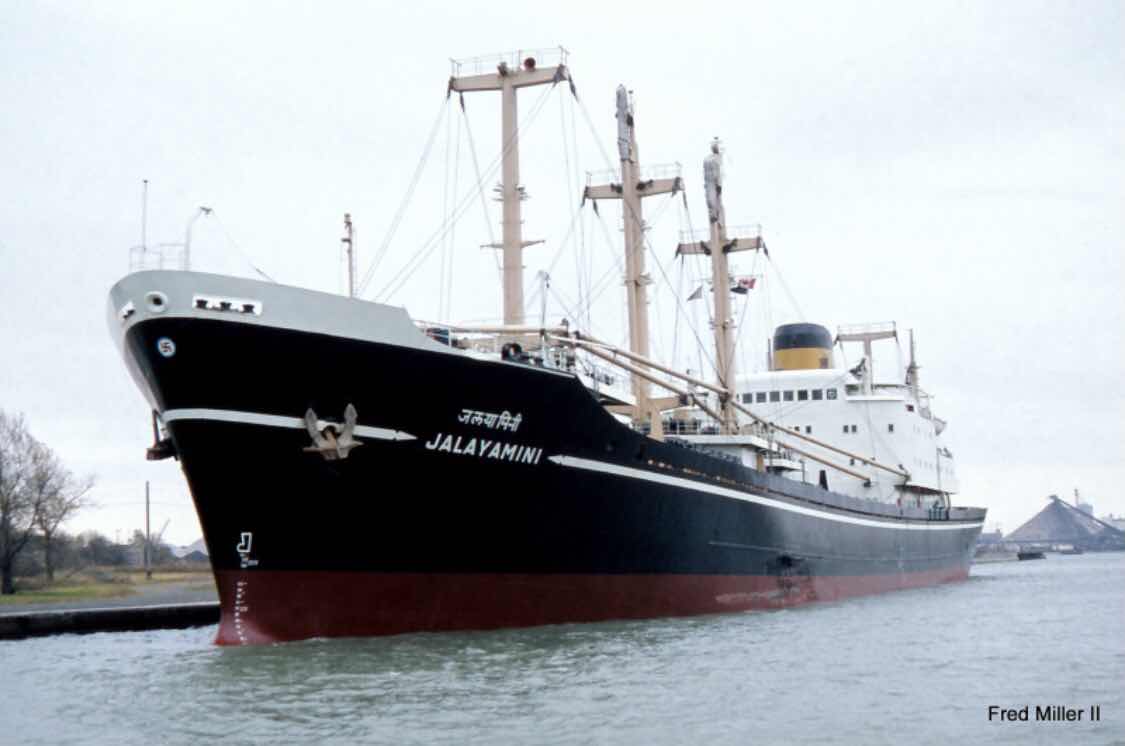
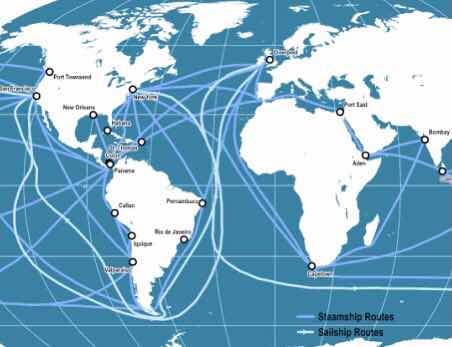
There was one voyage that I passed through three major canals of the world and went round the globe too. It was a memorable voyage I made on the Jalayamini. The year was probably 1973, my last voyage as a Second Engineer before my promotion to Chief Engineer. 


(From ShipSpotting.com)

My Chief was Sipahimalani, a tall, huge man whose  girth exceeded his height. He was the captain of the Scindia cricket team and brother of the Indian test captain GS Ramchand. He was also from the  filmy Sippy family who had shortened their name. All said and done, he was an insufferable character.

The voyage began quite normally and without fanfare from Bombay in the liner trade to Europe and back. I expected to be back in India within 4 months.  But that was not to be.


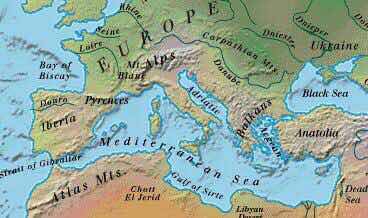
The first stop was at Port Suez at the southern end of the Suez Canal.  The passage through the Suez was quite uneventful except for the failure of the Suez Canal Light which was a monstrosity that was placed on board at Port Suez and meant to be used during darkness during the roughly 15 hour passage through the Suez Canal.  The switch of this monstrous lamp was a mercury switch which failed.  I refused to have anything to do with it and advised the captain not to pay for its rental.  Anyhow, we did manage to make it through without the use of this horrible looking lamp.

Then we were in the Mediterranean and sailed past Alexandria where the Collosus of Rhodes once stood guarding the entry into River Nile. After sailing the length of the Mediterranean, we entered the Straits of Gibralter.  The two ports guarding the entry to the straits was Gibraltar to the north on the Iberian peninsula and Ceuta of Spain to the south in Africa.  


We hugged the north coast as per the traffic  regulations and passed into the Bay of Biscay.  Through tumultuous seas we went past the English Channel to the lively port city  of Rotterdam.

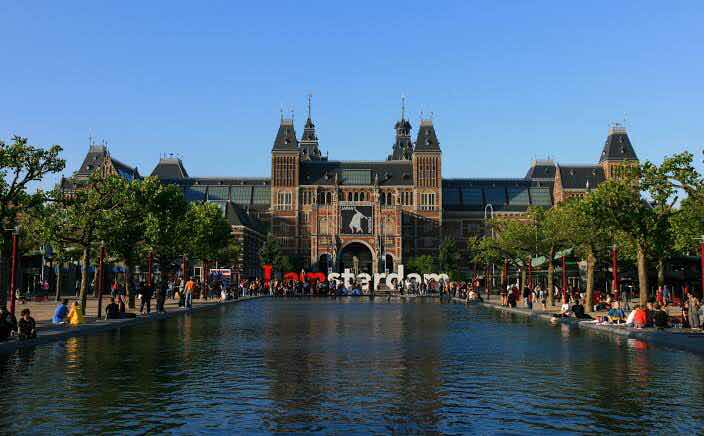
Rotterdam was a lovely city with windmills, old houses and rivers all around.  I also took the opportunity to visit Amsterdam, 100 miles away (an hour's train ride) and admired this gothic city.  I could not go to the Rijksmuseum to see Rembrandt's *Night Watch* and sorely regretted it.


(Rijksmuseum)

Our next port was Hamburg (in W Germany those days) and for that we had to go through River Elbe.  Hamburg is a sailor's port.  Terrific night life, pubs, bars and restaurants galore.  Our next port was Gdansk (old Danzig) and the adjacent port of Gdynia in Poland. 


To reach Gdansk, we had to go through the Kiel Canal.  Nothing spectacular but something mysterious happened.  I was in the Engine Room when I got a call from the Captain on the bridge that the ship was suddenly listing to port (left of the ship) slightly.  I looked at the Clinometer and sure enough it showed a small list.

I assured the captain I had not transferred any oil or altered the water ballast configurations.   He sounded worried and requested me to transfer some oil to correct the list which I did.  But surprise of surprises, within half hour, the ship was suddenly listing to starboard (right) and I called the captain and he requested me to transfer the oil back, which I did and the ship righted and stayed so.

That evening, at the dinner table, the captain explained the mystery.  We were passing a nudist colony on the port side and the entire ship's staff had collected on that side to wave at the nudists thus listing the ship!

We then went to Gdansk and we had to anchor for a few days in the stormy Baltic Sea  before we got a berth. Though I had never been seasick throughout my sea career, the monotonous roll and pitch of the ship made me want to throw up; which I, fortunately did not.

But there we got the message that we have to now go to the East coast of USA instead of back to India. 

I will spare you the details of the Atlantic crossing but we did the usual round going to New York, Philadelphia, Charleston, Wilmington, Houston and New Orleans. 


We were then told that there was no cargo available and we had to go to the West Coast of USA to pick up cargo.  This was my first encounter with recession in shipping which had turned our liner into a tramp.  This meant we would have to go through the Panama Canal.  We stopped at Veracruz in Mexico and anchored off Colon to await our turn.  But a bit about the Panama Canal first.


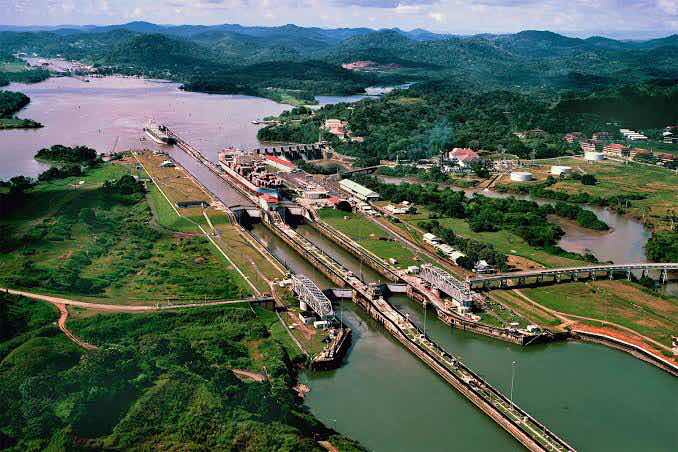
(Panama Canal, from Britannica)

The Panama Canal was not as easy to build as the Suez Canal.  The main difference was that whereas the Suez cut through a flat desert landscape,  the Panama Canal had to pass through hills and forests.  However, the French approached this problem like a pushy bull in 1881. After a couple of years they were defeated by the landscape and the anopheles mosquito (malarial) and they abandoned the project. Their scheme was untenable financially as well because it entailed making a channel through the hills that meant removing thousands of millions of cubic metres of earth to get a straight channel through like the Suez from the Atlantic to the Pacific. Also the Pacific Ocean  was higher than the Atlantic Ocean off both the coasts of Panama. That meant that the sea would create tidal waves within the channel which is quite unacceptable.

The project therefore was taken up by the Americans.  They came up with a feasible engineering plan and the finances to back their project. Where there were hills, the American plan was to have locks which would raise the complete ship up the hill on one side and down on the other side. There are twelve such ship locks most of them being northeast of Panama City on the Pacific Coast.  The ship's would be pulled through by locomotive engines at these locks.  In echoes that would also reverberate 33 years later in India, the Panama Canal was inaugurated on 15 August 1914.

(Author note: The Panama Canal was expanded in 2007-2016)


(Panama Canal Schematics, Wikipedia)

So back to the Jalayamini. At one stage we were passing the locks at night and I went up from the Engine room to the deck to take advantage of the stopped engines while we were being hauled up by locomotives. In the darkness of the dim lights I saw a  team of men hauling and transferring our ship's ropes.  I saw that one of them was wearing a hat which I took to be a somberero. But when he was closer to me I thought it looked more like a turban.  I took a chance and shouted "Ki gal hai, paaji".

"Changa" came the reply. I was stunned. Here we were  half way across the earth and I was conversing with a Sardarji in the middle of the night in the wilderness in a distant land! Anyway, we moved on and this man disappeared into the darkness.

On the west coast, we went to Long Beach, San Francisco, Portland, Seattle, Vancouver and Port Alberni.  It was then across the Pacific which became a bit of a nightmare.


(Author Note: The Pacific Ocean is immense. In flat maps, it’s relegated to the outer edges, and that’s the image most of us hold in our minds. But in reality, it spans an entire side of the globe!)

Almost everyday, the ship would start going round in circles in the middle of the Pacific. Sipahimalani and I tried our best to resolve the problem but nothing worked. Our next port was Manila and the guys from Siemens (who provided the controls for the rudder) came over and did something and everything seemed ok.  But again a day after leaving and on our way to Hong Kong it  happened again. This time I decided to go to our Radio Officer, as he was the only guy who knew about Electronics (it was early seventies, remember). But again there was no solution. At one moment, I saw a book by Taraporewala and while leafing through it I came across a picture of an electronic card with a hammer shown next to it.  I went to bed and thought about it and decided to try one more time next morning.

I had told the Mate who was the Officer on Watch that I would be fiddling with the steering gear.

I tried a lot of things but nothing seemed to work.  We sailed on with the steering on emergency. Suddenly the vision of the page with the printed card and a hammer came back and I took each card out of its socket, tapped it (gingerly) on the bulkhead and put it back. It seemed to work. Although we took tug assistance to enter Hong Kong (just to be safe) the steering worked fine. Thereafter, we went on to Singapore and then to Bombay and there was no hint of trouble. Sipahimalani asked me many times what I did and I replied "Nothing". I had not learnt to like him enough to tell him what had solved the problem.

In Bombay, the round the world trip was over and I went to meet Mr. Sathe, our director.  He said, Sipahimalani tells me, “you were in the steering flat and you did something that solved the problem on which we have already wasted thousands of dollars.  Don't tell me you did nothing".  So I sheepishly told him that I had done nothing more than tapping each card on the bulkhead. He smiled and nodded. He told me to go on a few days leave to Delhi.

A few days later I got a telegram to join the Jaladhruv as Chief Engineer.  *I had got promoted!*

(From ShipSpotting.com)

Postscript by Monisha Choudhury:

I think Dada had written letters to me about this trip. I have vague recollections that in 1975 all my friends were going to give USMLE either in Lahore by train via Attari or Colombo or Manila, and Dada promised to fund my trip, if I cleared, to New York, USA at a princely sum of Rs 4000/-. But that was not to be as Daddy had heart failure with pulmonary oedema in 1975 followed by Ma with a subendocardial infarction during my Internship in 1976 and I completely gave up the idea of going abroad for further studies as Dada was still at sea.

Author Note: Life may have had other plans, but she would go on to pave her own way to realising her dreams. 16 years later, in 1992, she went to London to pursue an 18-month fellowship at St.Mary’s Hospital. The US dream became a reality as well, with subsequent stints in Chicago and Boston (Brighams Women Hospital, Harvard Medical College). 

Subsequently, he (Biswajit Basu) left Scindias and joined SCI and got married. It was around that time in Summer when we had a huge theft in our house where Boudi (Swati Basu) lost a lot of her marriage jewellery and we managed to catch one guy. Daddy made it his lifetime mission after that to bring the culprits to book and even met the then Prime Minister Morarji Desai! Not much effect though as the guy many years later was caught for some other theft!

Monday, 29 March 2021

🌍 Stories from the Suez

Ever Given, one of the longest container ships in the world today, ran aground on the Suez Canal on March 23, 2021. One of the busiest shipping routes ended up in a disastrous traffic jam, as the world reverberated with the consequences and were glued to the efforts to free it. 


(When your predicament is visible from space, you know you have a big problem! Read more about this event here.)

As we followed the news, Biswajit Basu’s experience in sailing through those waters, gave us all a deeper connect with the Suez. Let’s travel back in time with him, and visit the Suez of bygone times. Despite the passage of many decades, it feels like some things - like busy ships lining up in a narrow canal and battling the treacherous North Africa winds - stay the same!

By Biswajit Basu:

*SUEZ CANAL, 1955*

My first passage was through a Canal was the Suez Canal in July 1955 on the Polish Ocean Lines Motor Ship Batory. After Karachi and Aden, we went through the Red Sea. I remember my favourite pastime was to lean out of our cabin porthole and try to make one end of a strand of wool touch the sea. As far as I can remember, I never succeeded as the wind would blow my strand of wool horizontal!

[Author note: That poor strand stood NO chance! 66 years later, we are watching the 220,940 GT Ever Given, longer at 400m than the roof height of the Empire State Building, get blown horizontal across the canal!]

Anyway, then we reached Port Suez at the entrance to the Suez  Canal. We picked up our pilots and proceeded up-canal to Port Said at the northern end of the Canal. Port Said was our next stop with some waiting time at the Great Bitter Lake in between.

The Suez was historic. The canal was built for the Ottoman Turks (the Mamluk Dynasty had conquered Egypt) by French Engineers (de Lesseps). But, with the weakening of the Ottomans, the British bought their shares and became owners of the canal.  However, when Nasser came to power, he nationalised the canal and the British and Israelis mounted a combined attack on Egypt. The British-Israeli combination won. However, this fight was still going on when we had to return from England in 1957.  Since the Suez Canal had been closed down, we had to return to India via the Cape of Good Hope at the sothern tip of Africa retracing the path of Vasco da Gama 450 years before (Vasco reached Calicut on 19 May 1498). We returned on Steam Ship Circassia of the Anchor Line.  This was a much more luxurious ship and must have cost Daddy a bomb because we had to also take the longer route round Africa.

[Author Note: You can read more about these ships in our earlier blog posts - My First Sea Voyage and The First Voyage Back Home. 

Back to the young boy and his wool thread blown by recalcitrant winds...]

At Suez, the ship was invaded by hordes of traders who exhibited their wares on deck. They were wily and cunning and we were asked to beware and keep our cabins locked.

These traders (known as Gyppos, as they could rob you blind) brought all kinds of stuff.  Right from trinkets, carpets, antiques (usually dishonestly peddled as pharonic stuff), leatherware (usually camel) etc. etc. etc.  The decks were full of these little stalls put up by the Gyppos. (They were ubiquitous and came on board regularly also when I was sailing professionally on Scindia ships in the seventies).  I think they will be there even today!

After the Great Bitter Lake, we entered the northern stretch of the Canal.  In front of us was gleaming white beauty: the Steamship Himalaya of the Peninsular & Orient Lines. 


(SS Himalaya, pic from Wikipedia)

The Himalaya was a fabled ship, 'the Greyhound of the Seas' is what she was called and was top class in luxury and speed (with fares to match, I am sure).  She had left Bombay two days after us, had caught up with us at Suez and was destined to reach England 2-3 days before us.  She did the India-UK run in 14 days as conpared to the Batory which did it in about 20 days!  She was white and beautiful and led us like a queen!

I remember Port Said distinctly.  Even more Gyppos boarded but Daddy had decided we had enough of sailing and took us to town for an outing.  Port Said was a dirty town and I remember the ubiquitous flies. They were everywhere and could buzz you to death! 


(Port Said leaflet, Orient Line, 1955; from Museums Victoria Collection)

I remember Ma bought two beanbag-like camel leather stools. They were with us for many years but I do not know where they went. Maybe we lost them in our shift to Delhi from Bangalore.

So, that was my first passage through the Canal (though I would go through again in the seventies). We would still have to sail through the stormy Bay of Biscay and Southampton was still a week away.

In fact, it was in 1976 in Port Said, on my way back to India from the Great Lakes, that I received the letter which informed me of Ma's heart attack and Daddy's accident and I decided to quit going abroad. (More about that trip is in this blog post Voyage of Misery)

The Suez Canal thus proved historic to me personally as well!


Postscript by Monisha Choudhury:

Ma also bought a tapestry of a lady in white gown  with a matka of water and camels, which we had on our drawing room walls in R3 (Hauz Khas) till it was faded and falling apart. Even the two light brown and green bean bag with camels and Nefertiti on them were finally discarded in R3. They must have been bought at Aden or Port Said).

Thursday, 25 March 2021

🙋‍♂️Passing Ships

By Biswajit Basu: 

In the vast oceans of the world, it is rare to find a relative on a ship near yours. In my years at sea I only had one such occasion.

Every ship has what is called a VHF (Very High Frequency) radio which permits ships close by to talk by voice (as contrasted to the Morse Code main radio).

The VHF permits normal talk on many channels.  You keep it tuned to Channel 16 which is the common channel used by all ships to make initial contact before you switch to another free channel to continue and  avoid interference.

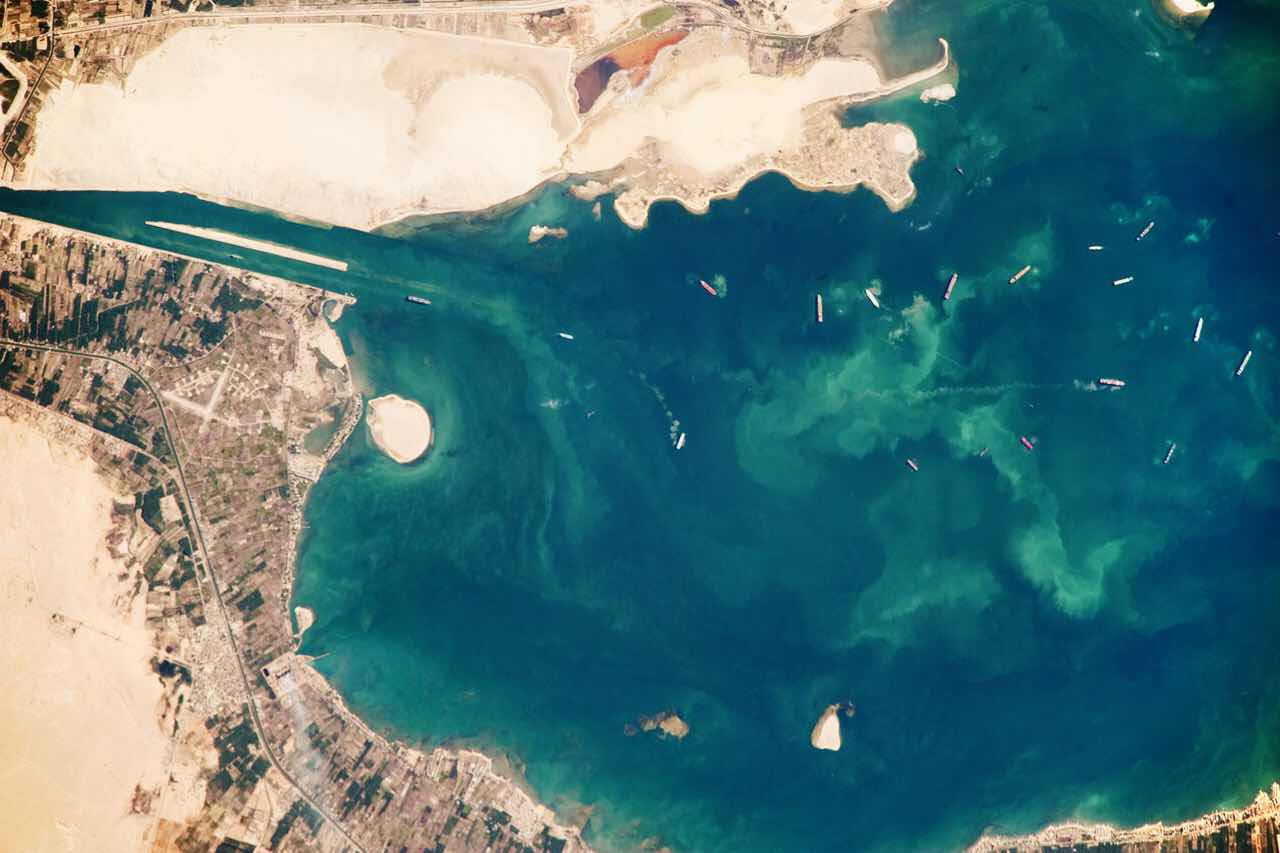
Somewhere in 1976, I was on the Jaladhruv on our way to the Great Lakes (USA & Canada) and we were anchored in the Great Bitter Lake (neither a lake nor bitter!) awaiting our turn to enter the Suez Canal. I was enjoying a glass of chilled beer in my cabin when the phone rang.  It was the Captain (I was the Chief Engineer) who said curtly "Please come to the bridge" and put the phone down before I could say anything.  Oh no! I thought.  Is the Anchor Windlass giving trouble again!  I rushed up to the bridge and the captain (Hegde was his name) pointed to the VHF handset lying on the desk and said "SURPRISE".  I was intrigued wondering who the hell would call me (must be a ship from our company wanting some spare parts, I thought.  "Hallo", I said gingerly.

Hello came the reply and the voice was familiar.  It was Shibesh! He had found out that my ship  was on the Great Bitter Lake too and decided to call me .

It was really grand talking to him as I had not spoken to him for over a year.  Piya had just been born and had even come on board when the officers had taken turns to take her on their lap.  Anyway, we spoke for a good half an hour about family and friends.  Soon it was our turn to enter the Suez Canal and we had to reoperationalise and start on this dangerous part of our voyage.

This was the only occasion when I was able to talk to a relative out at sea!


(Ships waiting on the Great Bitter Lake, to enter the Suez Canal. Pic by NASA Earth Observatory)


45 years later...
(March 25, 2021)

Biswajit Basu: “Do you recall this? I cannot remember the ship you were on.😊”
Shibesh Ghosh: “I was on Jala Mani I think. Yeah those were the days indeed. Always brings a smile.🙂🙂🙂”

Thursday, 25 February 2021

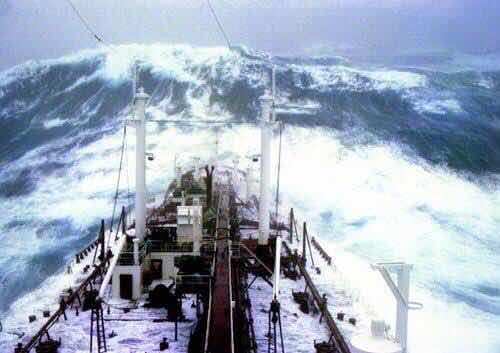
🌊 A Ship in Stormy Seas: Poem by Biswajit Basu

By Biswajit Basu:

A Ship in Stormy Seas


The skies are as black, the winds wail a dirge, 
The seas below roils in malevolent angry gray, 
The bows of the ship yaw in a circular sway, 
As it plunges to the bottom of the next rolling surge.

The heaving liquid mountains roll on in a metronomic run, 
As the forlorn bow teeters trembling then falls into the fray, 
Crashing back into the sea throwing up curving walls of spray, 
Droplets in stormy winds glinting like diamonds in a fading sun 

There is no pause as the waves roll on in relentless haste, 
And suddenly the falling bow meets an angry rising swell, 
The bow pierces the liquid wall and plunges deep into hell, 
Even as the ship careens up vertically in the watery waste.


The masts lurch as the great ship pitches and rolls, 
Drawing crazy circular trails in the darkened sky, 
Ropes flailing and clanking metal as the seagulls cry, 
Rise in a cacophony of shrieks of a thousand souls.

Waves roll on mercilessly as if the ship does not exist, 
Hurrying forth over the foc’sle, gaining speed, 
The first masthouse bifurcates it in a futile bid to impede, 
As it destroys all that loosely lie in its path to resist


The wave thus slithers on its fearsome course, 
Snaking along the length of the lurching deck, 
All that dares impede its path it does wreck, 
Jagged white froth driven by the angry sea's force.

The decks tremble as the engine rumble does falteringly pause, 
Frozen silent by the force of a mountainous wave, 
Starts again with the frenzied shriek of dying slave, 
As the stern turns skyward over the rolling watery jaws.

There is awe as I watch in terror wrapped, 
My heart beats in a crescendo so awful and hoarse, 
I feel so small caught in this battering force, 
I tremble in fear like a hare that is trapped.

The forces of nature are so terrifyingly strong
That in its scheme of things man is but an inconsequential dot, 
Nature flings aside all that his miniscule mind has assiduously wrought
And the juggernaut of nature moves inexorably on.


Wednesday, 24 February 2021

♓️ Time & Fate: A Short Poem

A small poem on life's philosophy by Biswajit Basu

TIME & FATE

I have swaggered down the narrow path of life

Peeping hither and thither under rocks and stones

Hoping to find a tunnel to happiness

Of landscapes where the forests are lush and gold


2
Where bubbling streams go their merry way

In unthinking delight unknowing whether they will skyward as rain go

Or perhaps as an insignificant drop in the vast salty sea below


3
And lofty cedars and junipers the sky do seek

And the resplendent rhodendron blooms pink and purple on the carpet below our feet

Rendering the landscape a joy to behold


4
But I know, under each stone could be a scorpion instead

Tail curled to strike and its venom deep inside to bed

Tumultuous writhings, cries and strain

Bringing the white agony of distress and pain 


5
But the stones and rocks have to be turned

To unfold what the enigma of Time has fated for you

Life is thus an unending quest.

Of things simply fated to happen to you.

🛍 Of Pursers and Radio Officers

By Biswajit Basu:

On a ship, the three broad professions are Deck, Engine & Catering. Anyone not in these catogories is considered eccentric if not downright insane. Two such people on the ship are the Purser and the Radio Officer.

Let me tell you stories of two Pursers I have sailed with.  One was Bijon Bannerjee.

Bijonda was a dimunitive chap.  You would swear he was a dwarf had he not been so handsome!  Now Bijonda, after his accounting and paperwork was over had time on his hands.  Likewise with me as the Junior Engineer with perpetual night duty, I was free  to go out during the day while in port while everyone else worked.  Everyone, that is, except for the Purser who would have finished his paperwork and port formalities.  This meant that the Junior Engineer and Pursers were free to go out to a restaurant or shopping during the day.

So it was with Bijonda and I. We would often go or together in various United States Ports for shopping.  This we normally did at superstores like Walmart, JC Penneys etc. Soon we got bored of following each other around and, as suggested by Bijonda, we would loaf around invidually in the departments of our choice and meet again at a fixed time at a fixed place.

This worked beautifully. Till such time that in one store I finished early and decided to join him wherever he was. I finally spotted him in the children's department diligently inspecting some clothes and oblivious to the world around him.  I found this rather intriguing because he had just been married and had no children. Even more intriguing was the fact that he was looking at  clothes for older boys.  For a moment I thought he was buying something for a relative.  But suddenly I saw him enter the trial room and matters became clear. I cornered him back on board where he sheepishly admitted that the smallest US size in the men's clothing  was too large  for him and he had to do his shopping in the children's department! 😊

Pursers and shopping reminds me of the story of Bardoliwalla our Parsi purser.  One day, just before arrival Bombay, I went to his cabin for a chat.  I found new men and women's clothes strewn all around and he was doing something with them.  I noticed he was removing the price tags and the SALE tags.  My heart warmed for him thinking that he was doing so with the intention of gifting them to his relatives.  So I told him so and he said they were indeed gifts.  Then he started putting back the price stickers and I found that funny and told him so.  You can depend on a Parsi for being totally honest.  He said that the stickers he was putting back were of a higher price than the original. Thus, he said two things could happen 1) the recipient (his relative) would accept it as a gift and would be very happy that Bardoliwalla had bought him/her a very expensive gift and 2) The recipient would insist on paying him and then he would be at a profit which would cover his purchases that were accepted as gifts! Talk of Parsis being money minded!

Well, talking of money-minded Parsis, here is one Bardoliwalla told me himself.

Bardoliwalla's wife was a classmate of Mrs Sumati Morarjee, our Chairperson.  Bardoliwalla told me he would dread the day that his wife would announce that Sumati ji had invited them for tea.  I found this funny.  Why should he dread the occasion that Sumati ji would invite her classmate and her husband who was an employee?  I was surprised and told him so.  He said Basu...you bengalis will never understand, I would spend Rs 5/- (in those days) as taxi fare for Rs2/- worth biscuits and tea but the dreaded moment would come when she would call her driver, Narayan, and ask him to drop us home.  So what was so dreadful about that, I countered.  "Abbay Gadhera", he said.  If I took a taxi home it would cost me Rs. 5/-.  Now I have to tip Narayan 10 bucks!

Monday, 22 February 2021

👥 Famous neighbors from the past

Before settling down in Hauz Khas, Delhi; Monisha (Moon) Choudhury had quite a nomadic childhood. Here are some of her famous neighbors. 

By Monisha Choudhury: 

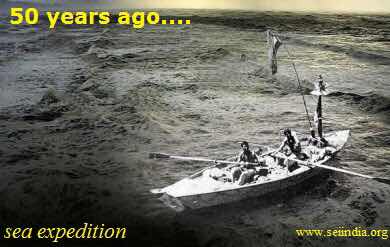
I remember Donald (George Albert) Duke, who was our neighbour living in 18 Polo Road Delhi Cantt, later to become famous as he and Pinaki Chatterjee both from the Navy rowed across the Bay of Bengal. They came to our school FAPS (Frank Anthony Public School) as Chief Guests, sometime in 1968-69.

Donald had a beautiful sister Jane and a younger brat of a brother shooting birds and anything moving with a catapult!

Added by Biswajit Basu:

George took early retirement from the Navy and branched into Maritime and undersea repairs etc. I met him many times in his office in Kurla as he was interested in getting into dredging. He told me his younger brother, migrated to UK long ago and breeds horses.

Blogger Note: In 1969, George Duke and Pinaki Chatterjee rowed from Calcutta (Kolkata) to Port Blair, across the choppy Bay of Bengal. They started on Feb 1 and reached their destination on Mar 2. More about the feat and pictures here


(From an article posted in 2019 in the aforementioned link)


By Monisha Choudhury:

Another famous neighbour of 2/1 Brunton Cross Road in Bangalore, were the Manekshaw sisters. They were the daughters of Air Vice Marshal Jemi Manekshaw, brother of Field Marshal Sam Manekshaw. They were great fans of Pat Boone and Elvis Presley. We had booming music thanks to them....Oh Oh Oh Bernadine!

Added by Biswajit Basu:

Yes, I remember him well looking dapper on his Ducati (I think) motorbike next door in Bangalore. His daughters are Erna & Sherna. Sherna is my age and Erna is younger. They run Basil & Thyme in Sanskruti now. The Defence Ministry was trying to close down the complex. I think the matter is still in court. 

(Blogger note: It seems that the restaurant was relocated to Sunder Nagar a couple of years ago. As of 2021, it is currently closed)

The senior Manekshaws now live in Hauz Khas. I had the unfortunate experience of banging into Uncle Manekshaw's car in 1991. Gentleman that he is, he was very nice and did not even stop. This accident took place near where IIT flyover is (not sure if it was there in 1991).

Blogger Note: Air Vice Marshal Jemi Manekshaw served the Air Force, Medical services along with clocking up over 700 flying hours, including solo. He was awarded the Param Vishisht Seva Medal in 1961. His wife, Bhicoo Manekshaw, is also famous. She was India’s first cordon bleu trained chef and ran the India International Center (IIC) kitchen in the 60s-80s. In 1992, she joined her son-in-law’s restaurant Basil & Thyme.You can read some very interesting anecdotes from her culinary career here. She passed away in 2013.


By Monisha Choudhury: 

Brig (Dr.) Rasamay Ganguly, the famous surgeon and later Dean at AFMC, Pune, was our neighbor in London in the 50s and again in Delhi in the 60s. His elder daughter, Utpala (Polly) is my age. They used to live upstairs at 5 St Charles Sq, London in 1955-57.

We were, once again, neighbors in the 60s, at 22 Polo Road, Delhi. By then, the two younger children - Monomoy and Mala, had been born. I remember Monomoy as a young brat! His granddad, in his white dhoti and bare chest with poita and grey hair, was always running after him! Mala is now a Pathologist in USA.

Blogger Note: In the late 60s, the Basu family lived in 20 Polo Road, Delhi Cantonment. Even numbered houses were on the same side of the road. The Duke family lived in House No. 18 and the Ganguly family lived in House No. 22. They eventually settled down and built the house at R-3, Hauz Khas. 

Lots of famous guys lived in Hauz Khas, writers like Amrita Pritam, Chanchal Sarkar and old famous actors.

(Biswajit Basu) ......and arguably the most famous if them all: Kalpana Joshi (nee Dutta) of the Chittagong Armoury Raid!

Yes, she was a great pal of Daddy and Ma. Ishan, her grandson spent most of his first three years at our house. She gave her house for my wedding,  for Panna’s family to stay. I used to give neurobion injections to PC Joshi ex President of Communist Party. She was mostly in our house and was a great cook. She often gave us loitay shutki fish and puli paish, made with star and half moon shaped puli from Chittagong.

Blogger Note: You can read more about Kalpana Datta here

Sunday, 21 February 2021

👥 First Ship: Crew Memories

Details of Biswajit Basu’s first ship posting are 
here. In this post, we meet two of his first crew mates. 

By Biswajit Basu:

One more thing that might interest you of my first voyage is that our Chief Officer was Norman Moses Sassoon. He is from the famous Sassoon family who were the Rothschilds of Bombay and a dock remains named after the family in Colaba to this day.

On the second day, I woke up to the knock of the Deck Serang (head of the Deck crew) who announced "Bada Malim saab aapko yaad kiya hai" (Bada Malim saab is the Chief Officer). Wondering why the C/O would be remembering me, I replied "Saab ko thank you bol dena". Spluttering, the Serang explained that this was a polite way for a senior officer to summon a junior. It was Sassoon wanting to meet me to get to know me. He turned out to be a really wonderful person.  Tragically l, he would lose his brother, Flt Lt. Lloyd Moses Sassoon in the 1971 Bangladesh War (he was a crack Canberra pilot).


(Norman and Lloyd Sassoon - a tribute to Flt. Lt. Lloyd Moses Sassoon, click here)

By the way, the person peering into the radar the previous evening during departure at Madras was the Third Officer, Deepak Malhotra who became a great friend and lives in Bangalore now with his lovely wife, June and two sons. He was the smarty who enabled the Russian Inspector in Odessa to declare our ship had to be disinfected because of the maggots in the rawhide which is how we got a lovely winter vacation in Odessa! 😊

(Blogger Note: You can read about the Odessa anecdote here)

✈️ First Flight to First Sail: The journey begins...


By Biswajit Basu:

How I was posted on my first ship

I received a telegram in Delhi to report to our Calcutta Office of Scindia Steam Navigation Co. Ltd to start my career as an engineer officer on a merchant ship.  It was mid September 1970.

I took the brand new Rajdhani Express which was reputed to do the journey in 17 hours.

I was put up in the Marine Club in Calcutta and told to get my papers ready.The most important document I needed to travel anywhere in the world was a Continuous Discharge Certificate (CDC) which was a bit of a procedure and was issued by the Shipping Master. Finally I was issued one (No 143408) which, essentially was more powerful than the Indian Passport as ai could travel to any country in the world while a passport was a a document with some restrictions in those days.

On 28th September, I was told I would be taking the afternoon flight to Madras from Calcutta.  It was on an Indian Airlines flight on a Sud Aviation Caravelle. The odd thing about this aircraft was that it had 3 rear mounted engines  But who cared.  I was on my first flight and that too on a jet plane!


(From Jetphotos website)

There seemed to be a terrible hurry once I reached and I was bundled into the Shipping Office to 'sign on' and straight to the ship in Jawahar Dock where I was introduced to the Second Engineer (I was 5th).  Before I could say Jack Robinson, the engines rumbled on and I was underway. 

(Madras now Chennai Port, Wikipedia)

After dinner, my first on board, I was introduced to the Chief Engineer (a senior and a gold medallist). Next in line was the Master who was an old Englishman, Capt. Paget.  Capt. Paget was not in his cabin but on the bridge and so up I went.  Everything was black on the bridge with various lights (some coloured) blinking on various desks.  As my eyes adjusted to the darkness I made out the Captain looking into the night with the twinkling lights of Madras receding in the distance and a strange orange glow over the city.

There was pindrop silence on the bridge except for the distant rumble of the engines and the hiss of the wind.  The solitary helmsman was at the wheel taking orders from someone I could not see and repeating them.  Then I heard the Capt say "Mate, forget that contraption. At night you don't see the land: you smell it"

It was the hoary captain teaching the young 3rd Mate (who was peering into the radar) the tricks of their trade.  I was then introduced to Capt. Paget who wished me a great career.

That was my first day at sea. It was 29th September 1970. Little did I know then that 27 months would pass before I could go home again!


Post Script by Monisha Choudhury:

Wow Dada! What a great beginning away from home! Great memory. I do remember your long trips and short visits home. One was on Daddy and Ma’s 25th Wedding Anniversary. When we garlanded them both and you gave me my first golden Seiko watch which I proudly displayed and wore forever, for ages. Must be 1972. I was wearing my designer blue with yellow flowered bell bottoms and a short blue shirt which was made by a famous tailor frequented by LSR fashionistas at Kailash Market. You, of course, looked handsome and impressive with your black rimmed glasses!

Sudeshna Dey memories

  Picture of Sudeshna Dey and her grandmother Gopa Ghose, circa unknown.  Gopa Ghose - age 30s, Darjeeling Sudeshna Dey nee Ghose - 21 years...